

Ordinary people doing extraordinary things….
Igniting the Ordinary follows a fairly ordinary bloke for one year. It’s about finding purpose, challenge, and growth in the middle of everyday life. Written by a firefighter, husband, and dad, it follows the honest journey of chasing big goals while juggling family, work, fitness, and the chaos of a brain that doesn’t always follow the manual. From rebuilding fitness and pursuing England selection in skeet shooting, to navigating ADHD, dyslexia, and the mental weight that comes with the fire service, this blog is about proving that ordinary lives can still carry extraordinary ambition. Because sometimes the biggest changes don’t start with dramatic moments — they start by simply deciding to light a spark in the everyday.
October 1st 2025
Chapter One: A Slightly Chaotic Beginning
Right then… where do I start?
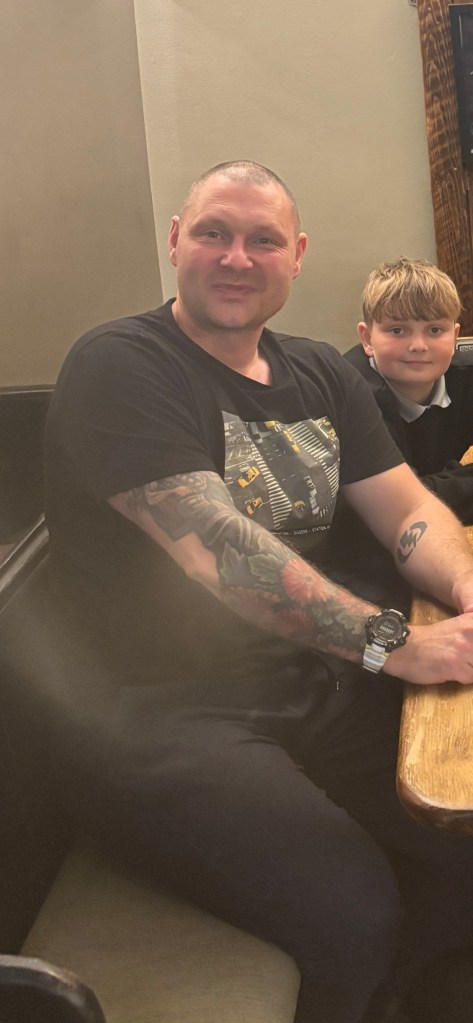
Probably with the obvious: I’m a 47-year-old Watch Manager in the fire service, married for 20 years, father of two brilliant boys, owner of a ever expanding dad-bod, and until very recently… the proud carrier of a brain that seemed determined to operate like a browser with 47 tabs open at all times.
Some people have focus.I have enthusiasm followed by confusion.
For most of my life I just assumed that was normal.
I’d start projects with the energy of my Labrador that’s just discovered a tennis ball… and then two weeks later I’d find myself in the garage wondering why I owned three half-built shelving units, a motocross bike that “just needed one more thing doing,” and a harmonica I was absolutely certain I was going to learn during lockdown.
It turns out there might have been a reason for that.
Recently it dawned on me that maybe—just maybe—my brain wasn’t quite playing the same game as everyone else’s. After years of bouncing between hyper-focus and “where did I leave my keys?” I started looking into ADHD.
Suddenly a lot of things made sense.
The constant mental noise. The starting-ten-things-finishing-three thing.
The ability to focus like a laser on something exciting… while simultaneously forgetting to reply to a text message for three weeks.
Classic.
But just when I thought the plot twist had been revealed, life threw another one in for good measure.
Not long ago I was diagnosed with dyslexia.
Now, at 47 years old, that’s a slightly surreal moment.
It’s a bit like finding out halfway through a marathon that you’ve been running in someone else’s shoes the entire time.
Things that had always felt harder than they should—reading dense text, writing without second-guessing every sentence, staring at words until they start rearranging themselves like they’re in a boy band—suddenly had an explanation.
Which was both reassuring and mildly irritating.
Because on one hand it’s nice to know you’re not just thick…but on the other hand you do wonder why nobody mentioned it sometime around Year 5.
Still, better late than never.
And to be honest, the diagnosis has been oddly freeing. Instead of beating myself up about the way my brain works, I’ve started learning how to work with it.
Which is handy, because life isn’t exactly slowing down.
Firefighter, Watch Manager… Controlled Chaos
Being a wholetime firefighter is already a job built around controlled chaos. Being a Watch Manager means trying to keep that chaos pointed in roughly the right direction.
It’s leading a crew, making decisions quickly, keeping people safe, and occasionally pretending you know exactly what you’re doing even when the job throws something unexpected at you.
It’s a role I take seriously, because when the bells go down it usually means someone somewhere is having the worst day of their life.
But like most firefighters, we also balance that seriousness with a bit of humour and the occasional well-earned tradition.
Which leads nicely to one of my favourites.
The Sacred Family Pub Night
If you ask me what a perfect evening looks like, it’s not anything fancy.
It’s a family pub night.
Nothing glamorous. Just the four of us sat around a table, talking rubbish, eating something that probably isn’t on any nutritionist’s recommended list, and enjoying a bit of normal life.
And if I’ve just come off a particularly long shift?
My go-to reward is about as sophisticated as it gets:
A pint of lager and a packet of crisps.
Simple pleasures.
Unfortunately, those simple pleasures—combined with shift work and busy family life—have a habit of slowly expanding the waistline.
The Dad-Bod Situation
Let’s talk about weight.
Not in a tragic “before and after” Instagram way… more in the honest reality of what happens when life gets busy, the kids grow up, work gets hectic, and suddenly your metabolism quietly resigns without telling you.
I’ve always been active.
I’ve run a marathon.I’ve boxed.I’ve raced motocross.
These days I’m also chasing something that keeps my competitive side alive — selection for the England CPSA English Skeet team.
Which, if you’ve never tried skeet shooting, is basically standing still while small orange discs attempt to humiliate you at high speed.
It’s technical, frustrating, addictive, and brilliant.
And here’s the thing most people outside shooting don’t realise — your body weight matters.
A lot.
Shotgun fit is everything. The gun needs to mount the same way every single time. When your bodyweight changes, your posture changes, your mount changes, and suddenly that perfect gun fit… isn’t so perfect anymore.
For me, 78kg is the sweet spot.
That’s my fighting weight.That’s where I move best.And more importantly, that’s where my shotgun fits perfectly..
Which means there’s a fair bit of work to do.
Enter Coach Phil
This is where Phil Matthews enters the story.
Phil runs a programme called Fighting Fire Fit, designed specifically for firefighters. No nonsense, no gimmicks, just proper training built around the realities of the job.
And more importantly… accountability.
Because here’s the thing about ADHD brains: we love a new challenge.
But we also love abandoning things halfway through when the excitement fades.
So having someone in my corner who understands the job, understands the physical demands, and won’t accept “I got distracted reorganising the garage” as an excuse… well, that’s exactly what I needed.
Phil is basically the human equivalent of that voice in your head that says:
“Stop messing about and do the work.”
Except louder.
And probably with burpees.
Why This Blog Exists
This project — Igniting the Ordinary — isn’t about becoming some sort of ultra-disciplinedh superhero.
It’s about the messy middle.
The juggling of family life, work, fitness, competitive shooting, and a brain that occasionally decides to chase a completely unrelated idea halfway through a sentence.
It’s about being honest about the struggles most blokes quietly deal with:
Weight creeping up
Motivation disappearing
Brains that don’t quite behave
Balancing family, work and ambition
And the constant feeling that maybe we should be doing a bit better
But also recognising something important:
You don’t have to be perfect to improve.
You just have to start.
This blog is my attempt to do exactly that.
To chase England selection in skeet shooting.
To be the best Watch Manager I can be.
To understand how my brain actually works.
And hopefully to prove that even slightly chaotic, middle-aged dads can still chase big goals.
Even if we occasionally forget where we put the car keys along the way.
So that’s the Plan
The next chapter starts where the real work begins.
The first weigh-in.The first brutal training sessions.The moment I realise just how much weight I actually need to lose..
But every good story needs a starting point.
This one starts here.
November 3rd 2025
Chapter Two: The Moment You Admit It
There comes a moment when you have to be brutally honest with yourself.
For me, that moment came after a family holiday.
Now, the holiday itself was brilliant. Great food, great company, and beer that seemed to magically appear whenever my glass looked remotely empty. Exactly the sort of holiday it should be.
Unfortunately, when I got home and properly looked at myself… the reality hit a bit harder than the sunburn.
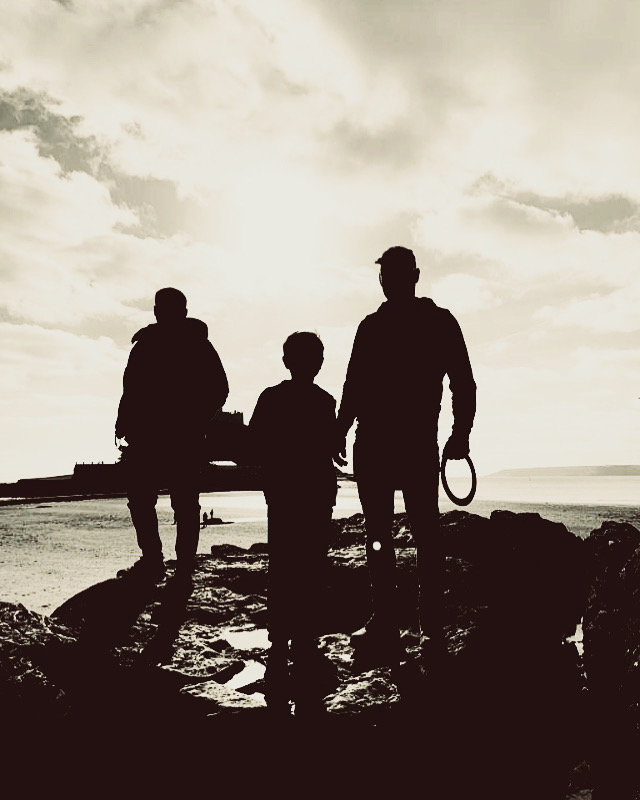
I’m 102kg.
That might not sound catastrophic to some people, but when I looked in the mirror the image staring back at me resembled a melted wheelie bin after a particularly enthusiastic rubbish fire.
Not exactly the look you’re going for as a Watch Manager in the fire service.
And if I’m being completely honest, it bothered me for another reason too.
At work I’m surrounded by younger firefighters. Good people, keen, fit, and right at the start of their careers. The job is physical. It demands a lot from you. And whether we like it or not, people notice how you carry yourself.
Standing there knowing I was this far out of shape, I started to feel like I wasn’t setting the example I should be.
That stung a bit.
What’s strange is I genuinely don’t know exactly when it happened.
There wasn’t a dramatic moment where everything went off the rails. It just crept up slowly over a couple of years. A few kilos here, a few more there. Shift work, busy life, family time, the odd takeaway, the occasional pint… then suddenly one day you realise you’re a long way from where you used to be.
And worse than that, fitness had quietly disappeared from my day-to-day life.
No structure.
No routine.
No real accountability.
Which, if you’ve got a brain like mine, is basically the perfect recipe for doing absolutely nothing about it.
So once we got home from the holiday and normal life resumed, I decided something had to change.
Properly change.
Calling in the Cavalry
That’s when I contacted Phil Matthews from Fighting Fire Fit.
I’d heard about Phil for a while. His work with firefighters isn’t just limited to the UK — he’s helped crews all over the world. More importantly, he understands the job, the demands, the shift patterns and the realities of fire service life.
Phil also served in the fire service himself, which matters.
You can spot within about ten seconds whether someone actually understands the job or whether they’ve just read about it in a fitness magazine.
Phil gets it.
We arranged a video call to talk through where I was at and where I wanted to get to.
Now, while we were chatting, I had this strange feeling that Phil was already mentally building the plan.
You know when someone is listening to you… but you can almost see the cogs turning in their head?
That was the vibe.
I’m explaining the situation, talking through my weight, my fitness, my goals with skeet shooting, and my job at the station… and you can almost picture him quietly assembling the pieces.
Exercises.
Food.
Training structure.
Accountability.
All being mapped out in real time.
And to be fair to him, he understood my concerns immediately.
The lack of fitness.
The absence of training from my routine.
The way life had slowly edged exercise out of the picture.
There was no judgement in the conversation, just a calm, professional approach to fixing the problem.
Which is exactly what I needed.
The Goal (Which Suddenly Sounds Slightly Ridiculous)
During that call we also talked about the target.
And this is where things start sounding a bit ambitious.
To get my shotgun fitting perfectly again for competitive skeet shooting, I need to be around 78–79kg.
That’s my sweet spot.
That’s the weight where the gun mounts consistently, my posture is right, and everything lines up the way it should.
Right now?
I’m sitting at 102kg.
Which means I’m roughly 24 kilograms away from where I need to be.
When you say that out loud it suddenly sounds like quite a lot.
Because it is.
But here’s the thing.
The longer I sat there thinking about it, the clearer it became that the bigger problem wasn’t the weight.
It was the direction.
For the last couple of years I’d been drifting. No plan, no structure, no accountability.
Now suddenly there was a plan.
There was a coach.
And there was a clear target sitting there at 78kg.
The road between here and there is going to involve a fair bit of work. Probably some suffering. Almost certainly some moments where I question my life choices.
But sitting there on that video call with Phil, one thing became very clear.
Something needs to change.
And it needs to change now.
December 27th 2025
Chapter Three: The Work Starts Here
Before we get into training plans, weigh-ins and the slow death that is lunges…
There’s someone I need to mention first.
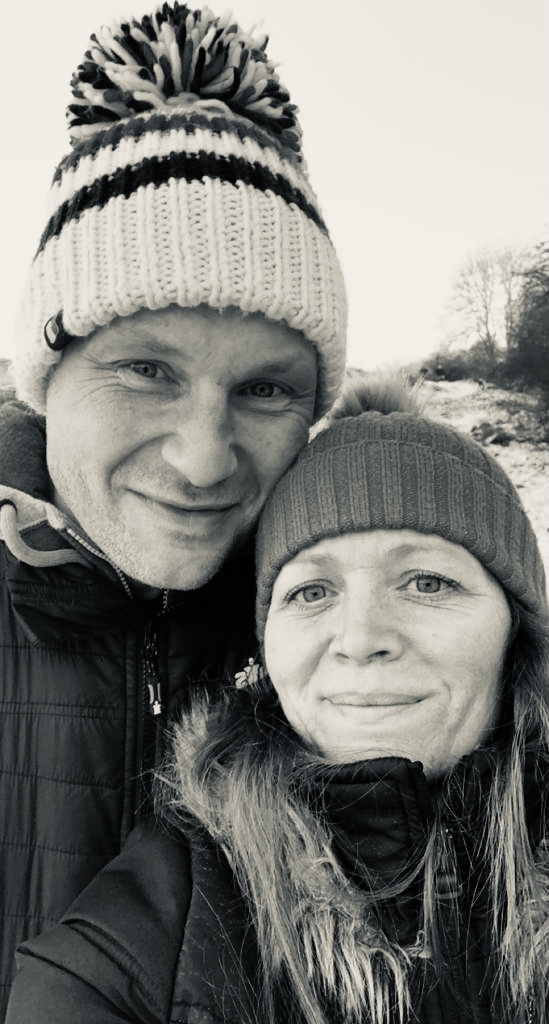
My wife, Fay.
Fay and I have been together since 2001, which means she has had a front row seat to more of my ideas, hobbies, phases and questionable life decisions than anyone reasonably should.
And to her credit… she’s still here.
She’s been there through everything.
The early days of motocross weekends, which mostly involved mud, broken bike parts and the uniquely horrifying smell of motocross track portaloos. If you’ve never experienced one of those on a hot summer day, count yourself lucky.
She’s been there through my various “this is definitely the thing I’m going to take seriously now” phases.
Boxing gyms.
Black eyes.
Early morning training sessions that seemed like a brilliant idea the night before.
She’s also been there for the tougher parts of life that don’t make good stories down the pub.
The fire service has a way of leaving its mark on people. PTSD and the mental weight that comes with the job isn’t just something firefighters carry — families carry it too. And Fay has quietly stood beside me through those times as well.
Then there’s the rest of it.
The new ideas.
The random challenges.
The slightly ridiculous goals I occasionally decide to chase.
Through all of that she’s never once said, “Maybe just sit down and be normal for a bit.”
Well… she might have said it once or twice.
But she’s still here anyway.
And now she’s watching me embark on another adventure — this one involving losing the best part of a bag of cement in body weight, training relentlessly, and trying to become something resembling a fit firefighter again.
If there’s one person who has earned the right to roll their eyes at this whole plan, it’s her.
But like everything else over the last twenty-odd years, she’s right there beside me.
Which, when you think about it…
Might actually be the most impressive thing in this entire story.
It’s one thing saying you’re going to change.
It’s another thing entirely when the plan actually begins.
Suddenly there are weigh-ins, workouts, food logs, and a coach called Phil who is quietly expecting you to do the things you said you were going to do.
Funny how real it all gets at that point.
The Goal
Before anything else, I had to sit down and properly define the goal.
Not the vague “get fitter” idea that people say in January and forget by February.
A proper goal.
There’s roughly 24 kilograms that need to disappear before April.
Or, as I prefer to think of it, the best part of a bag of cement.
When you frame it like that, it sounds slightly ridiculous.
But that’s the number.
And if I want my shotgun to mount the way it should for skeet shooting, that’s the weight I need to be.
No shortcuts. No excuses.
Just work.
Life Doesn’t Pause for Your Fitness Plan
The slightly inconvenient part of this whole transformation is that life hasn’t stopped.
I’m still working full time as a Watch Manager.
I’m still a husband.
Still a dad.
Still navigating school runs, family life, work shifts, competitions, and the general chaos that comes with normal life.
Fitness programmes are very easy to follow when you’re living in a fitness bubble.
When you’re juggling real life? That’s where it gets interesting.
And just to make things slightly more challenging…
It’s December.
Which means Christmas is approaching like a freight train made entirely of roast potatoes, cheese boards, mince pies and beer.
Normally I absolutely love Christmas.
Food is one of life’s great joys. Always has been. Good food, good company, a pint in hand — that’s my natural habitat.
Which means what I’m about to say next would normally be completely unthinkable.
I’m tracking every calorie.
Every single one.
Now if you’ve never tracked calories before, let me explain something.
It’s slightly obsessive.
You suddenly find yourself reading the back of food packets like you’re studying for a science exam.
“Why does this yoghurt have 140 calories?”
“How can three biscuits equal an entire meal?”
“Surely crisps can’t be that bad…”
The real shock is when you start realising that some of the things you thought were fairly harmless are basically calorie grenades.
My love of food hasn’t gone anywhere.
I’m just now painfully aware of exactly what it’s doing.
The Phil Factor
Throughout all of this, Phil has been exactly what you’d expect from someone who runs a professional coaching programme.
Calm. Structured. Professional.
Which is impressive, because if I were coaching me I’d probably have lost patience by now.
Part of the programme involves checking in and sending updates.
Training.
Food logs.
Progress.
And if I’m being honest, my early updates weren’t exactly Pulitzer Prize material.
Phil is asking for content and updates, and I’m basically responding with something along the lines of:
“Yeah… training done… food mostly alright… nearly died doing lunges.”
Not exactly detailed analysis.
You can almost sense his polite frustration through the messages.
But to his credit, he stays completely professional.
Encouraging where needed, correcting where needed, and quietly steering things back on track.
Which is important, because if I’m honest with myself, I’m probably not always eating the perfect things yet.
I’m improving.
But there’s still work to do.
The Training
The exercise side of this plan is… relentless.
Not impossible.
Just relentless.
Every session seems to find a new muscle that hasn’t been used properly for the last couple of years.
Squats hurt.
Lunges hurt.
Things involving jumping definitely hurt.
There are moments during training where I question whether my legs are still technically part of my body.
But here’s the thing.
It’s exactly what I expected.
I set the goal.
If I’m going to drop the weight of a small bag of cement before April, the work was always going to be uncomfortable.
So there’s no point complaining.
Just get on with it.
The Part People Don’t Talk About
There’s another side to the fire service that doesn’t get talked about as often as it should.
The mental side.
People see the job from the outside and it looks exciting. Blue lights, big red trucks, dramatic rescues.
And yes, sometimes it is.
But firefighters also see things most people will thankfully never have to experience.
Bad accidents.
Serious injuries.
Fires where people lose everything.
Sometimes worse.
You carry those things with you whether you like it or not.
Over time those experiences can build up, and for many firefighters that can lead to PTSD or other mental health struggles. It doesn’t just affect the firefighter either. It can affect their families, their friends, and the way they show up in everyday life.
The job doesn’t always stay at the station when the shift ends.
And if we’re being honest, one of the ways firefighters have traditionally dealt with that pressure is through alcohol.
Not because anyone thinks it’s a great solution.
But because sometimes it’s an easy way to quiet the noise for a while.
A few pints with the watch after a tough job. A drink to take the edge off after a long shift. It’s part of the culture in many places, whether people like to admit it or not.
For me, this journey isn’t just about dropping weight or getting fitter.
It’s also about being more aware of the habits that come with the job and making sure they don’t quietly take control.
Fitness helps.
Routine helps.
Structure helps.
And talking about these things helps too.
Because pretending firefighters are immune to mental strain doesn’t do anyone any favours.
The Journal
Somewhere along the way I also started something else.
A journal.
Not a fancy digital app. Not a spreadsheet.
An old-school paper notebook.
Every day I jot things down.
Weight.
Training sessions.
Thoughts.
Goals.
It started as a way to keep track of the journey and help with writing this blog, but it’s actually become something more useful than I expected.
There’s something strangely powerful about putting things on paper.
It clears your head.
It makes the goal feel real.
And it gives you a place to be honest with yourself when things aren’t going perfectly.
Which, as it turns out, is quite liberating.
The First Big Result
By the end of December something unexpected happened.
The plan started working.
The original target Phil and I set was one kilogram per week.
Steady progress. Sustainable.
But by the time December finished, the scales told a slightly different story.
I’d dropped 12 kilograms.
Twelve.
I’ll be honest, that surprised me.
I’d been strict throughout December. Even through Christmas — which for someone who normally treats the festive period like a competitive eating event was a serious shift in behaviour.
But the result was there in black and white.
Progress.
Real progress.
The Road Ahead
There’s still a long way to go.
Getting from 102kg down towards 78kg isn’t a straight line.
There will be setbacks. Plateaus. Days where motivation disappears completely.
But sitting here at the end of December, looking back over the journal, one thing is clear.
The direction has changed.
For the first time in a long time, I’m actually moving towards the goal instead of drifting away from it.
The only problem now?
Getting from here to 78kg is going to require something close to a superpower.
Or at the very least…
A lot more squats.

February 13th 2026
Chapter Four: Cold Lessons
Just when I thought the training plan with Phil was the hardest thing happening in my life…
Sweden entered the chat.
Not a gentle Swedish summer either. Not lakes, forests and people drinking coffee in nice woolly jumpers.
No.
-29°C Sweden.
The kind of cold where the air hurts your face, your nose hairs freeze together, and you suddenly realise that maybe human beings were never really designed to live in places like this.
Which is exactly where we were headed.
What ISAR Actually Is
Before we get to the cold, it’s probably worth explaining what ISAR is.
ISAR stands for International Search and Rescue.
In simple terms, it’s the system used when disaster strikes somewhere in the world — earthquakes, collapsed buildings, large-scale incidents — and specialist rescue teams deploy to help locate and rescue people trapped in the rubble.
These teams bring highly trained firefighters, medical staff, search dogs, engineers, logistics specialists and a ridiculous amount of equipment.
The idea is simple.
When the worst happens somewhere in the world, countries send teams who know how to operate in dangerous, unstable environments to try and save lives.
It’s serious work.
Highly technical.
And very, very demanding.
Which is why the training is designed to be just as tough.
Sweden
Part of that training involved a cold weather exercise in Sweden.
Now when someone casually says “cold weather training”, you might imagine something like a chilly British winter day.
A bit of frost. Maybe minus two if things are getting dramatic.
What they don’t tell you is that Scandinavian cold exists on an entirely different scale.
When we arrived, the temperature was sitting at -29°C.
Minus twenty nine.
That’s not “wrap up warm” cold.
That’s “your eyelashes are freezing together” cold.
The first breath outside felt like inhaling knives.
Living Outside
The real shock wasn’t just working in that temperature.
It was living in it.
This wasn’t a nice warm hotel with the occasional training session.
We were sleeping outside.
Working outside.
Eating outside.
Basically existing outside like a group of slightly confused British firefighters who had wandered far too north.
Everything takes longer in cold like that.
Putting gloves on.
Setting equipment up.
Even simple tasks suddenly become awkward when your hands feel like frozen sausages.
You learn quickly that the cold doesn’t care how tough you think you are.
It wins every time.
The Toilet Situation
There’s also a practical detail about operating in those temperatures that nobody really talks about beforehand.
Going to the toilet.
Now, in normal life this is a fairly simple operation.
In -29°C, it becomes a tactical exercise.
Layers have to come off.
Cold air immediately attacks every exposed inch of skin.
And suddenly you’re trying to complete what should be a basic human task at Olympic speed while wondering if frostbite in unfortunate places is actually possible.
Let’s just say…
Efficiency becomes very important.
The First Night
The first night sleeping out there was a shock to the system.
Even with the right kit, the cold finds its way in.
You lie there in a sleeping bag listening to the strange silence of snow-covered forests and wondering how Scandinavian people have managed this for centuries without immediately moving somewhere warmer.
Every small movement sends a little wave of cold air into the bag.
Your brain spends most of the night doing the same calculation over and over again:
If I move… I’ll be colder.
But if I don’t move… something is probably going numb.
It’s a delicate balance.
The Northern Lights
One night though, something happened that made the whole experience feel completely different.
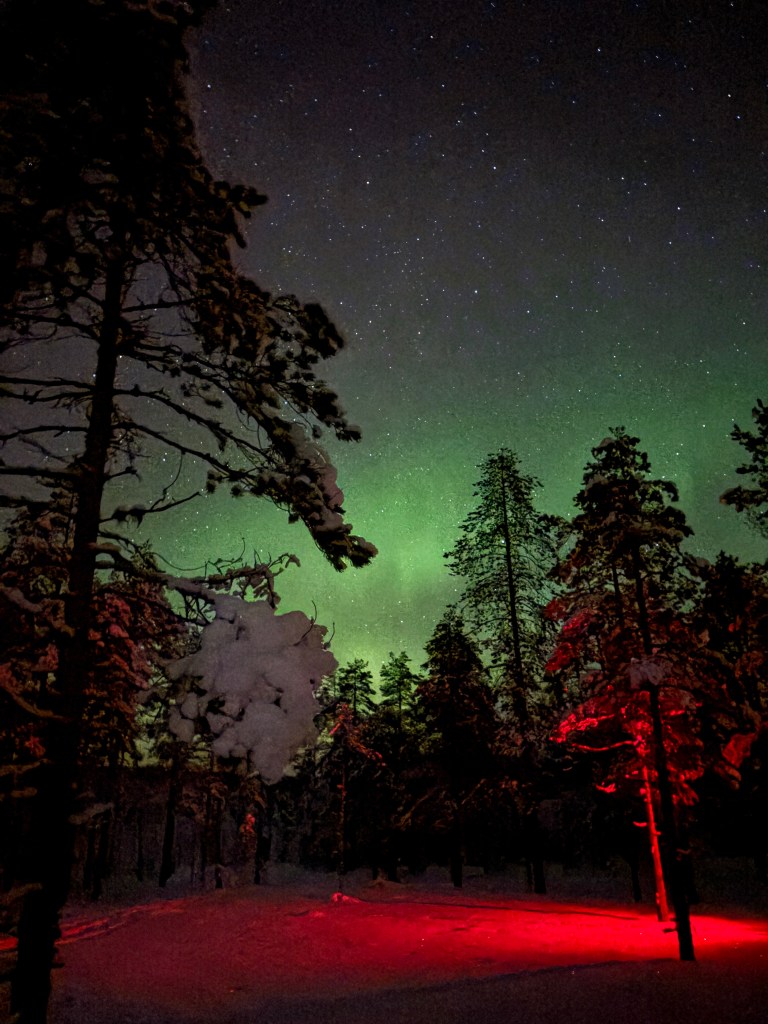
The sky lit up.
At first it was just a faint glow, almost like someone had turned a dim light on behind the clouds.
Then slowly it began to move.
Green light stretching across the sky like giant ribbons, shifting and dancing above the forest.
The Northern Lights.
No photos really do them justice.
Standing there in complete darkness, miles away from any town or artificial light, watching the sky move above you… it’s hard to explain the feeling.
Part of you is just staring like a child seeing something magical for the first time.
The other part of you is thinking:
This planet is incredible.
The Fire
Later that same night I ended up sitting alone by the fire.
Everyone else had drifted off into their tents or sleeping bags, and I stayed up for a while just watching the flames and the sky above the trees.
No traffic.
No phone signal.
No artificial light.
No background noise at all.
Just the crackle of the fire and the quiet of the forest.
It’s strange how rarely we experience true silence.
Sitting there in that cold, with the stars and the northern lights overhead, it felt like the world had slowed right down.
For someone who normally lives in the noise of fire stations, family life, alarms, training sessions and the constant chatter of a busy brain…
It was almost peaceful.
And if I’m honest, it felt slightly… spiritual.
Not in a dramatic lightning bolt from heaven kind of way.
Just a quiet sense that moments like that matter.
That stepping away from the noise sometimes lets you hear things you didn’t even realise were there.
I sat there for a long time that night before finally turning in.
Cold.
Tired.
But oddly clear-headed.
Perspective
Standing out there in Sweden, freezing in temperatures that felt slightly illegal, something else occurred to me.
A few months earlier I’d been worried about the scale reading 102kg and wondering how on earth I was going to turn things around.
Now I was standing in -29°C, operating on very little sleep, working hard, and realising something important.
Human beings are far more capable than we usually give ourselves credit for.
The limits we imagine are rarely the real ones.
Sometimes you just need to put yourself somewhere uncomfortable enough to prove it.
Although preferably somewhere slightly warmer than -29°C next time.
Back to Normality
Eventually the exercise ended and we began the journey home.
Boots packed away.
Kit thawing out.
Frozen beards returning to normal human facial hair.
When the plane finally touched down back in Great Britain, the first thing that hit me was the temperature.
It was something like five degrees.
Five degrees.
And it felt positively tropical.
People were walking around in light jackets while I was standing there thinking this might actually qualify as beach weather.
Within a few hours everything was back to normal life.
Traffic.
Phones buzzing.
Emails.
The general noise of everyday life returning like someone had turned the volume back up on the world.
But something from Sweden came back with me.
That quiet moment by the fire.
The silence.
The feeling that sometimes stepping away from the noise reminds you what actually matters.
And the realisation that if you can function at -29°C, sleeping outside and working in brutal conditions…
Then getting up early to train, stick to the plan, and chase a goal back home probably isn’t quite as difficult as it first seems.
February 8th
A Promise I Didn’t Expect to Make
There’s one more story sitting quietly in the background of all this.
It’s something I’ve never really spoken about before.
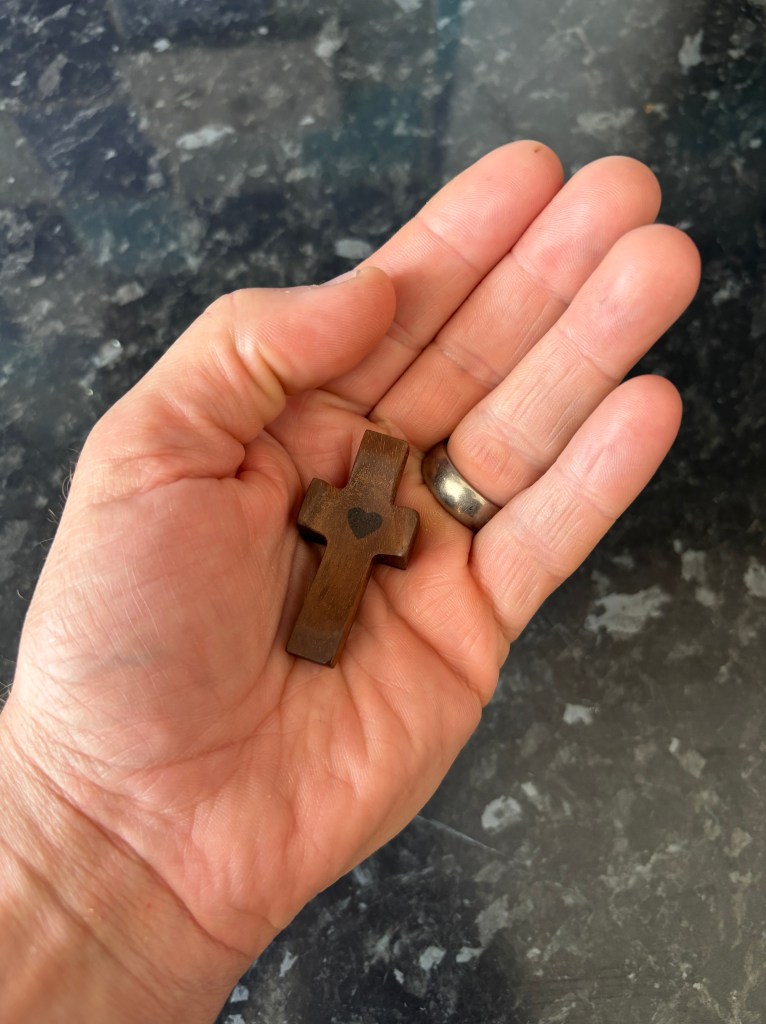
In fact, for most of my adult life I’ve done the opposite. I’ve kept it quiet and, if I’m honest, I probably renounced it for many years.
Faith was never something I talked about.
I know that for some people, faith can be a bit of a switch-off — the moment it’s mentioned, they tune out. I get that. This isn’t about preaching or trying to convince anyone of anything. It’s just part of my journey, and if I’m going to do this properly, I need to be honest about all of it — even the bits I’m still figuring out myself.
Back in 2009, my brother had a motocross accident while we were both practising at a track. One minute everything was normal — two idiots riding motorbikes around in circles — and the next minute everything had gone horribly wrong.
For a while we genuinely thought he might die.
He ended up in hospital in a coma, and those days of waiting around felt like they lasted about three years each.
Now, I’ve always considered myself an agnostic. I never really wanted to sign up to any particular religion, but I’ve always accepted that faith exists for a lot of people and clearly means something to them.
But one night after visiting him in hospital, I went back to my old plastering van and started clearing it out. I think I was just trying to keep my hands busy and stop my brain from wandering somewhere darker.
And then it hit me.
I completely broke down.
Proper ugly crying in the back of a dusty plastering van. Not exactly the heroic moment you’d expect from a bloke who rides motocross and works in the fire service.
And without really thinking about it, I did something I hadn’t done since Sunday school when I was about seven years old.
I prayed.
I don’t know why I chose the Christian God. He was just the one I remembered from childhood, so he got the call.
I didn’t ask for anything complicated.
Just one thing.
My brother’s life.
Over the next couple of days, he woke up.
Now I’m not saying there’s a direct line between those two events… but the timing was suspiciously good.
Life carried on after that, as life tends to do, but something about that moment stayed with me.
For years afterwards there was a quiet sense of faith somewhere in the background of my life. Not loudly. Not in a church-every-Sunday kind of way.
More in a “well… maybe there’s something going on up there” sort of way.
But like a lot of things in life, over time it faded into the background. Work, family, responsibility — the noise of everyday life tends to crowd those thoughts out.
Then about a year ago I had a strange realisation.
It felt like I owed God a favour.
I can’t explain exactly why.
I don’t know what it looks like.
I don’t know how I’m supposed to do it.
And I definitely don’t know how long it will take.
But somewhere in the back of my mind there’s a quiet understanding that the debt is there.
The other thing I’ve realised is this:
I don’t actually know if I’m Christian enough.
I’m not exactly the picture of a perfectly well-rounded, calm, patient, God-fearing man.
Anyone who works with me will happily confirm that I can still be a bit of a pain in the arse from time to time.
I get things wrong.
I lose my temper occasionally.
I can be stubborn.
I’ve definitely said things over the years that I shouldn’t have said.
Fire stations are not exactly known for their quiet, saint-like personalities either.
So there’s a genuine question sitting in the back of my mind sometimes.
Do I actually have what it takes to be that kind of man?
The kind who lives without prejudice.
Without judgement.
The kind who tries to be patient and kind even when it’s not easy.
Because if I’m honest, that’s a pretty high bar.
And I’m very much a work in progress.
But maybe that’s the point.
Maybe faith isn’t about already being the finished product.
Maybe it’s about recognising where you fall short and trying to do a little better the next day.
Trying to be a better husband.
A better dad.
A better example to the younger firefighters who are coming into the job now.
Trying to treat people fairly.
Trying not to judge people too quickly.
Trying to leave things a little better than you found them.
If that’s the direction of travel, maybe that’s enough to start with.
Because every now and then life gives you a moment that makes you stop.
A moment where the noise disappears and things feel… clearer.
Standing alone beside a fire in a frozen Swedish forest, watching the northern lights move across the sky, was one of those moments.
The kind that makes you wonder whether there might be more going on in the world than we usually allow ourselves to believe.
And maybe this whole journey — the weight loss, the discipline, the pushing myself again — is part of figuring that out.
One way or another…
I’m going to try to pay that favour back.
Even if all I really manage to do is spend the rest of my life trying to become the kind of man who deserved that miracle in the first place.
And if there is something bigger watching all of this unfold, I hope it sees that I’m trying — in my own slightly clumsy, occasionally stubborn firefighter way — to leave the world a little better than I found it.
February 26th
Chapter 5
Where It All Started
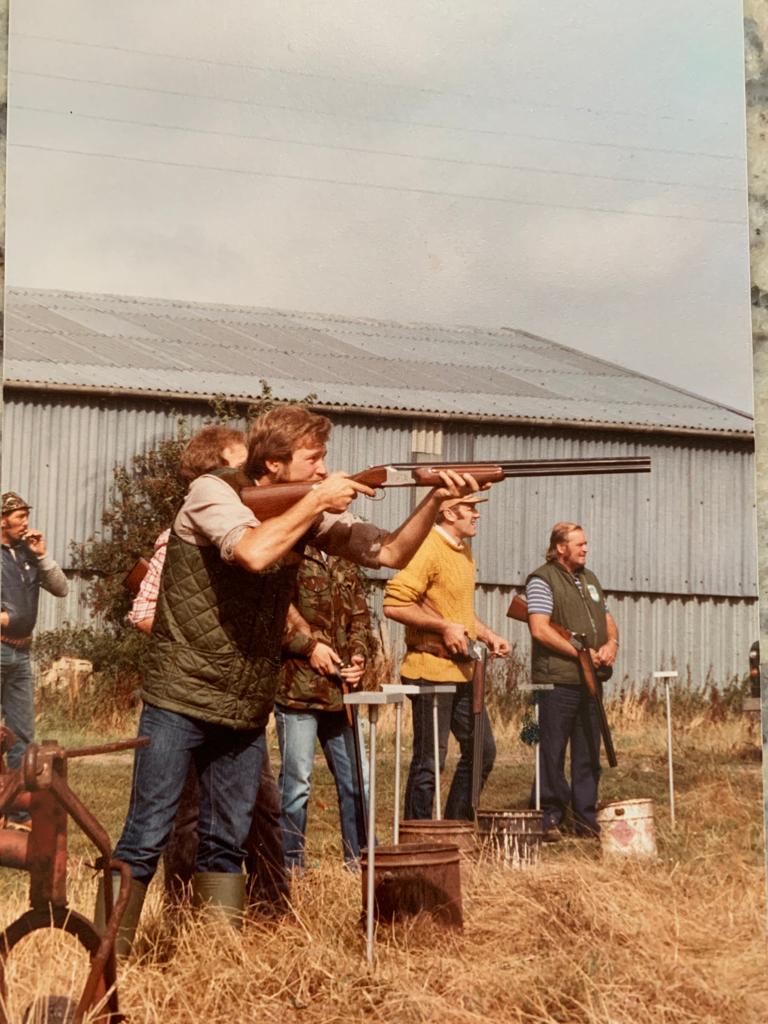
Long before I ever stood on a skeet layout, before scores, rankings, or England selections meant anything to me, clay shooting was simply something my dad did.
Back in the 1980s he shot regularly. It was a different era — different guns, different cartridges, and probably far less overthinking than shooters tend to do today. From the stories I heard growing up, shooting was straightforward: good mates, a bit of friendly competition, and the simple satisfaction of watching a clay explode into dust in the sky.
As a kid, I didn’t realise how much of that world had quietly soaked in around me.
The smell of gun oil.
The sound of cartridges rattling into a pocket.
The way shooters talked about “good days” and “bad days,” as if the targets themselves had moods.
Back then it was just Dad’s thing.
He would often take my brother and me along to what were known as “straw bale shoots,” where he’d shoot for his club. They were relaxed affairs — a few shooters, straw bales stacked around the layout, plenty of laughter and conversation.
On the way home we would often stop at a pub for lunch. My brother and I would run around the garden while Dad enjoyed a well-earned pint of lemonade and lime and a bit of food.
Those memories are still incredibly clear, even though they reach back nearly forty years.
Simple days.
Good days.
Life moved on, as it always does. Work, family, responsibilities — all the usual things that fill up the years. Shooting gradually slipped into the background of our lives.
Then my dad died far too early.
There’s no tidy way to describe a loss like that. When someone who has always been part of the structure of your life suddenly isn’t there anymore, it leaves an odd kind of silence behind. You begin to notice the little threads that once connected you.
For me, one of those threads was shooting.
Not long after he passed, I inherited Dads guns. I found myself drifting back towards it. At first I couldn’t really explain why. It wasn’t about competition or chasing scores.
It was something much simpler.
Standing on a shooting stand, holding a shotgun, felt like a small connection back to him.
In some quiet way it felt as though we were sharing the same space again.
Not in some overly sentimental way, and not through any grand emotional moment — just a quiet familiarity. The same sport. The same rhythm. The same small moment of satisfaction when a clay disappears into a cloud of dust.
That was where it all began
By the time I started taking shooting seriously, I had already spent years learning how to deal with pressure in other parts of my life.
Not on a shooting stand.
On the fire ground.
Long before scores and selection shoots mattered to me, I had joined the fire service. It’s a job that most people admire from the outside but don’t often get to see from the inside.
From the outside it’s the sirens.
The engines.
The flashing blue lights disappearing into traffic.
From the inside it’s something else entirely.
It’s discipline.
Training.
Teamwork.
And the quiet understanding that when the call comes in, people are relying on you to get it right.
Firefighting has a way of sharpening your focus.
When the bells go down and you’re pulling on your kit, there’s no room for hesitation. You rely on your training, trust the people beside you, and get on with the job that needs doing.
You don’t rise to the occasion.
You fall back on your training.
One of the strange things about firefighting is that the more chaotic a situation becomes, the calmer you have to be.
A building fire is loud, confusing and unpredictable. Alarms sounding, radios crackling, smoke limiting your vision to just a few feet ahead.
But inside that environment you have to slow everything down.
Check your breathing.
Trust the process.
Focus on the next step in front of you.
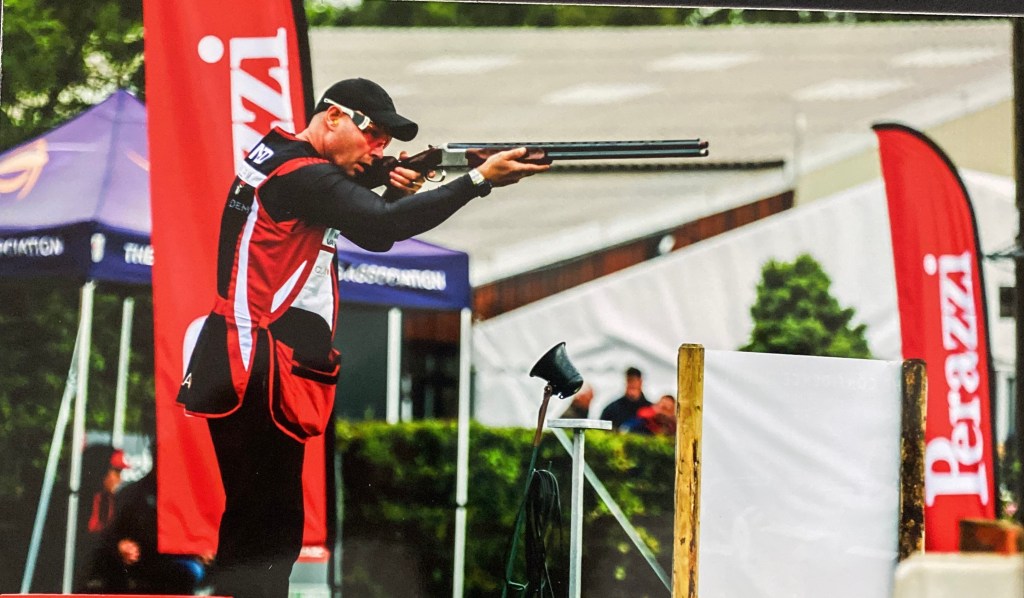
In many ways, standing on a skeet layout feels surprisingly similar.
Not because the danger is the same — of course it isn’t.
But the mental process feels familiar.
You’re standing there with the gun mounted, waiting to call for the bird. Your score is running through your mind. You know that one mistake could cost you the round.
The pressure creeps in.
And the only way to deal with it is the same way you deal with pressure anywhere else.
Slow down.
Trust the process.
Focus on the next target.
One of the things the fire service teaches you very quickly is that extraordinary moments are usually handled by very ordinary people.
Firefighters are not superheroes.
They’re mums and dads.
People with mortgages, school runs and shopping lists.
But when the moment arrives, training and experience take over.
The job gets done.
That idea has always stuck with me.
Because in a strange way it applies to shooting as well.
Standing on a layout with other shooters who are all chasing the same goal, you realise that nobody is superhuman. Everyone feels the pressure. Everyone feels the nerves.
The difference is simply who can manage those feelings the best.
Who can stay calm.
Who can trust their training.
Who can focus on one target at a time.
When you strip shooting right back to its simplest form, it becomes surprisingly similar to firefighting.
Both rely on preparation.
Both demand discipline.
And both punish you if you allow panic or doubt to creep in.
You don’t think about the entire round.
You think about the next target.
You don’t think about the final score.
You think about the next bird.
See it.
Move the gun.
Pull the trigger.
In the fire service you learn to deal with one task at a time.
In shooting, you learn to deal with one target at a time.
The mindset isn’t that different.
Igniting the Ordinary
When I look back at the journey — the sports, the shooting, the fire service — one thing stands out.
None of it began with grand plans.
No big speeches.
No dramatic turning points.
Just ordinary moments.
A kid watching his dad shoot clays.
Running along empty roads.
Racing motocross bikes through mud.
Stepping into a boxing ring.
Answering the bells at the fire station.
Each step quietly building the mindset that would eventually follow me onto a skeet layout.
And that’s the thing I’ve come to realise.
Extraordinary things rarely come from extraordinary beginnings.
More often than not…
they start with ordinary people willing to keep turning up.
One shift.
One race.
One round.
One target at a time.
Chapter 6
My Boys
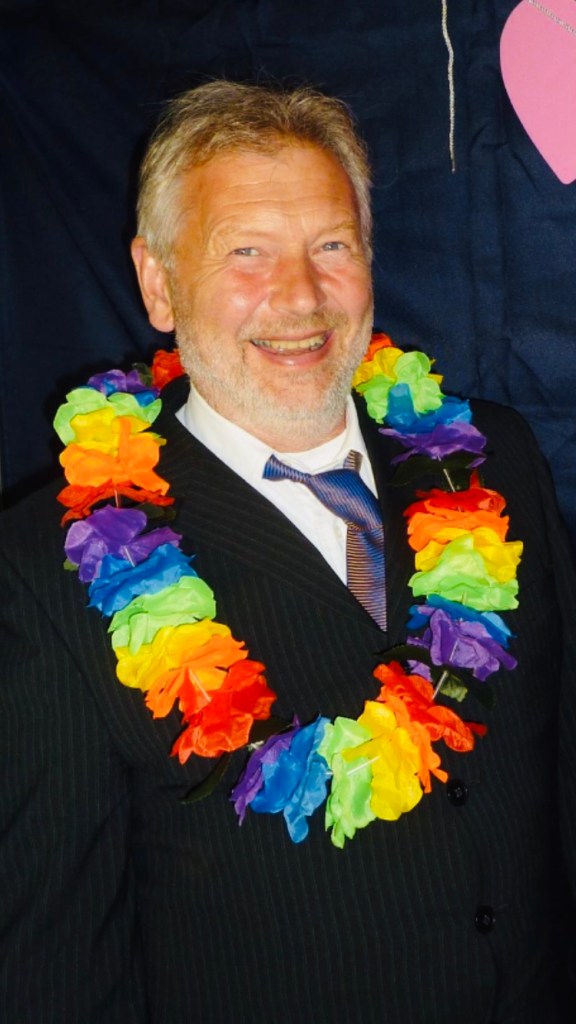
For all the things life has given me — the fire service, the sports, the shooting — the two things I’m most proud of are my boys.
Alf and Bert.
Alf is twenty-two now. That still feels strange to say out loud. In my head he’s still the little lad who followed me around asking questions about everything. But these days he’s an apprentice site manager working for a national building company, carving out his own path in the world.
Then there’s Bert, my youngest, thirteen years old and full of energy, curiosity and opinions about absolutely everything.
Somehow the years between them feel like they passed in the blink of an eye.
One minute you’re teaching them how to ride a bike.
The next they’re sitting across the table from you in the pub talking about work, football and life.
Shared Passions
Like a lot of families, we bond over simple things.
Food, sport, beer and laughter.
Both of the boys are devoted Leicester City fans. Proper fans. The kind who will happily watch the highs and suffer through the lows without ever wavering in their loyalty.
Then there’s pub night.
Not in the wild sense people sometimes imagine, just the simple tradition of sitting down together, having a drink, and talking about whatever happens to come up.
Sometimes it’s work.
Sometimes it’s football.
Sometimes it’s complete nonsense.
But those evenings are some of my favourite moments.
Just sitting there with my boys, watching them grow into the men they’re becoming.
The Conversation with Alf
Recently I spoke to Alf about something that I haven’t really spoken about much with anyone.
My faith.
Or more accurately, my return to it.
For many years I walked away from it completely. Life got busy, complicated, noisy — and faith quietly slipped out of the picture.
But over time something started to pull me back towards it again.
I explained to Alf that, in my own way, I felt like I was trying to repay a debt to God.
Not in a dramatic way. Not in a preachy way.
Just a quiet understanding that somewhere along the line I’d been given more chances than I probably deserved.
And maybe now it was time to acknowledge that.
What surprised me most was how calmly he took it.
No awkwardness.
No raised eyebrows.
He simply listened.
And then he said he understood.
That moment meant more to me than I probably let on at the time.
Time Together
The older the boys get, the more I realise how valuable time together really is.
Life gets busy quickly.
Work.
Responsibilities.
Their own lives starting to unfold.
So whenever we get the chance, we make time for road trips.
Nothing fancy.
Just getting in the car and heading somewhere — shooting grounds, football matches, random drives where the destination doesn’t really matter.
Those drives are often where the best conversations happen.
Or sometimes no conversation at all.
Just music, miles passing by, and the quiet comfort of being together.
The Things You Bring Home
One of the things that comes with the fire service is that sometimes you bring things home with you.
Not physically.
But in your head.
Certain jobs stick with you longer than others. Images, moments, decisions you replay long after the shift has ended.
It’s part of the job, and every firefighter learns how to carry it in their own way.
But as a dad you sometimes worry about those things spilling over into family life.
You try your best to leave it all at the station door.
Sometimes that’s easier said than done.
The Silent Pint
That’s where Alf has developed a skill that still amazes me.
We’ve developed something between us that we jokingly call the “silent pint.”
It’s a simple code.
If I suggest a silent pint, he knows exactly what it means.
We go to the pub.
Order a couple of beers.
And sit down.
If I feel like talking about something that’s on my mind, I talk.
If I don’t feel like talking, I don’t.
And Alf does something he’s been brilliant at since he was a little boy.
He reads the room.
Sometimes he’ll just sit quietly and let the silence do its thing.
Other times he’ll fill the space with stories, football chat, or light-hearted banter until the weight of the day lifts a little.
It’s a small thing, really.
But it means the world to me.
The Man We Miss
The truth is, a lot of the way I try to live my life — as a dad, as a man — comes from my own father.
My dad died in 2020 after suffering a stroke.
Even now, saying that still feels strange. Some people leave such a large presence behind them that it’s hard to accept they’re no longer physically here.
To me, he was a hero.
Not in a loud or dramatic way.
He was the kind of man who carried himself quietly. Calm, thoughtful, almost zen-like in the way he moved through the world. He didn’t rush, didn’t shout, didn’t try to dominate a room.
But when he spoke, people listened.
He had an incredible understanding of buildings and construction. He could walk into an old structure and almost read it like a book — how it had been put together, why things were built the way they were, the small decisions made by craftsmen hundreds of years ago.
He loved churches for that reason.
Not necessarily because he was deeply religious — in truth, he wasn’t particularly so — but because he understood what they represented. Faith expressed through stone and timber. Generations of people building something that would outlive them.
He could stand in an old church and explain how the roof trusses worked, why the arches were shaped the way they were, how the builders had solved problems with the tools and materials they had at the time.
It was history, engineering and belief all woven together.
Looking back now, I realise how much of that mindset quietly influenced me.
A Man Who Adapted
Later in life my dad lost his sight.
For many people that would have been a moment where the world became smaller.
But somehow he managed to keep his spirit intact.
Even without his sight, his love of life and curiosity about the world never really faded.
Trying to Be Like Him
I often catch myself wondering if I’ll ever quite live up to the example he set.
Not in terms of achievements or big milestones.
But in the way he carried himself.
Calm.
Kind.
Thoughtful.
He had a quiet strength that never needed to announce itself.
That’s the kind of man I try to be for my boys.
And I know they miss him too.
He was their hero as much as he was mine.
The Legacy
Sometimes when I’m sitting in the pub with Alf, or driving somewhere with Bert, I realise something quietly reassuring.
Parts of my dad are still here.
In the way we talk about life.
In the way we appreciate simple moments.
In the patience Alf shows during those silent pints.
In the curiosity Bert has about how things work.
It’s funny how people live on like that.
Not just in photographs or memories.
But in habits.
In values.
In the small ways we move through the world.
And every now and then I catch myself thinking that if my dad were sitting at the table with us now, watching his grandsons growing up, he’d probably just smile quietly.
The same calm, knowing smile he always had.
And that thought alone is enough to make me raise a quiet pint to him.
Chapter Seven: Fighting Weight
There’s a different kind of pressure when you get close to a goal.
Not the loud, chaotic kind you feel at the start.
Not the “where do I even begin?” feeling.
This is quieter.
Heavier.
Because now there’s nowhere to hide.
I’m sitting at 81kg.
Close enough to see it.
Close enough to feel it.
Close enough to know that 78–79kg — my fighting weight — isn’t just an idea anymore.
It’s real.
And with that comes something I didn’t quite expect.
Pressure.
The Weight Isn’t Just Weight
For most people, losing weight is about how you look.
Maybe how you feel.
For me, it’s something more specific.
It’s about performance.
At this weight, everything starts to come back into alignment.
Movement feels sharper.
Fitness feels more natural.
And most importantly — my shotgun starts to feel right again.
Anyone who shoots skeet will understand this.
Gun fit isn’t just important. It’s everything.
Mount, posture, consistency — it all depends on your body being in the same place every single time.
And when your weight shifts, even slightly, that consistency disappears.
For me, at 78–79kg, everything lines up.
At 81kg… it’s close.
But not quite there.
Or at least… that’s what I thought.
A Shift in Coaching
Alongside all of this, something else has changed.
My time working with Phil has come to an end.
Not because the programme didn’t work — quite the opposite.
It worked exactly as it was supposed to.
I now have the tools.
The structure.
The understanding of what needs to be done.
The reality is, it came down to a simple, honest decision.
I can’t afford two full-time coaches.
And right now, with where I am in this journey, the focus has shifted.
Because I’ve started working with a new coach on the shooting side.
David Beardsmore.
I’ve had a few lessons with him now, and I can honestly say…
He’s been brilliant.
David’s got serious pedigree in the sport. Years of high-level competition, coaching experience, and a reputation for developing shooters who actually perform when it matters — not just on the practice stand.
But what stands out most isn’t just his ability.
It’s his system.
He runs a structured programme that all his shooters follow. Not complicated, not over-engineered — just clear, repeatable fundamentals done properly, over and over again.
And that’s exactly what I needed.
Letting Go of Perfect
What’s interesting is how different the coaching feels.
Phil was about structure, discipline, building the foundation.
David is about something else.
He’s helping me loosen up.
Because if I’m honest, I’ve always had a tendency to overthink things.
Chase perfection.
Get tight.
Try to make everything exactly right.
Which sounds like a good thing… until it isn’t.
Because shooting — like most performance-based skills — doesn’t respond well to tension.
David sees that straight away.
And instead of adding more pressure, he’s doing the opposite.
Stripping things back.
And then he said something that stuck with me.
The gun fits perfectly.
There’s nothing wrong with it.
No major adjustments needed.
No complicated changes.
Just a small tweak to my gun hold.
That was it.
After months of thinking I needed to fix everything — weight, position, setup — the reality was much simpler.
The foundations were already there.
I just needed to trust them.
And more importantly…
Trust myself.
The Unexpected Win
Recently I had a week away on an all-inclusive holiday.
Now, historically, that would have been an absolute disaster from a weight point of view.
Buffets.
Beer.
Desserts that seem to appear every ten minutes.
The full package.
And for the first time in this whole journey…
I didn’t track a single calorie.
No app.
No weighing food.
No internal calculator running in the background.
Just normal eating. Enjoying myself. Switching off.
And when I got back?
My weight hadn’t changed much at all.
Which, strangely, might be one of the biggest wins of this entire process.
Because it means this isn’t just a diet anymore.
It’s become normal.
Discipline Over Motivation
At the start of this journey, motivation carried me.
New plan.
New focus.
New energy.
But motivation doesn’t last.
It fades.
Now it’s about discipline.
Doing the right thing when you don’t feel like it.
Turning up when it would be easier not to.
Holding the line when no one’s watching.
Because the last few kilograms aren’t about effort.
They’re about consistency.
The Voice in Your Head
There’s always a voice.
“You’ve done enough.”
“81kg is basically there.”
“No one will notice.”
But I will.
And that’s what matters.
Pressure
Because now there’s something else on the horizon.
The first England selection shoot.
One week away.
After everything — the weight loss, the training, the changes — it’s suddenly here.
Which brings a different kind of pressure.
Not just to turn up.
But to perform.
To prove that all of this — the discipline, the sacrifices, the early mornings, the calorie counting, the coaching — actually means something when it counts.
The Final Push
I’m close.
Closer than I’ve been in years.
The tools are there.
The weight is nearly there.
The gun fits.
The only thing that needed adjusting… was me.
So now the job is simple.
Keep showing up.
Keep trusting the process.
And when I step onto that stand in a week’s time…
Let it go.
Because maybe, just maybe…
There was never anything wrong with the setup—
Just a man who needed to realise he was already closer than he thought.

Chapter 8 – The Wilderness Years
This chapter is about friendship—the kind that’s forged early and never really leaves you.
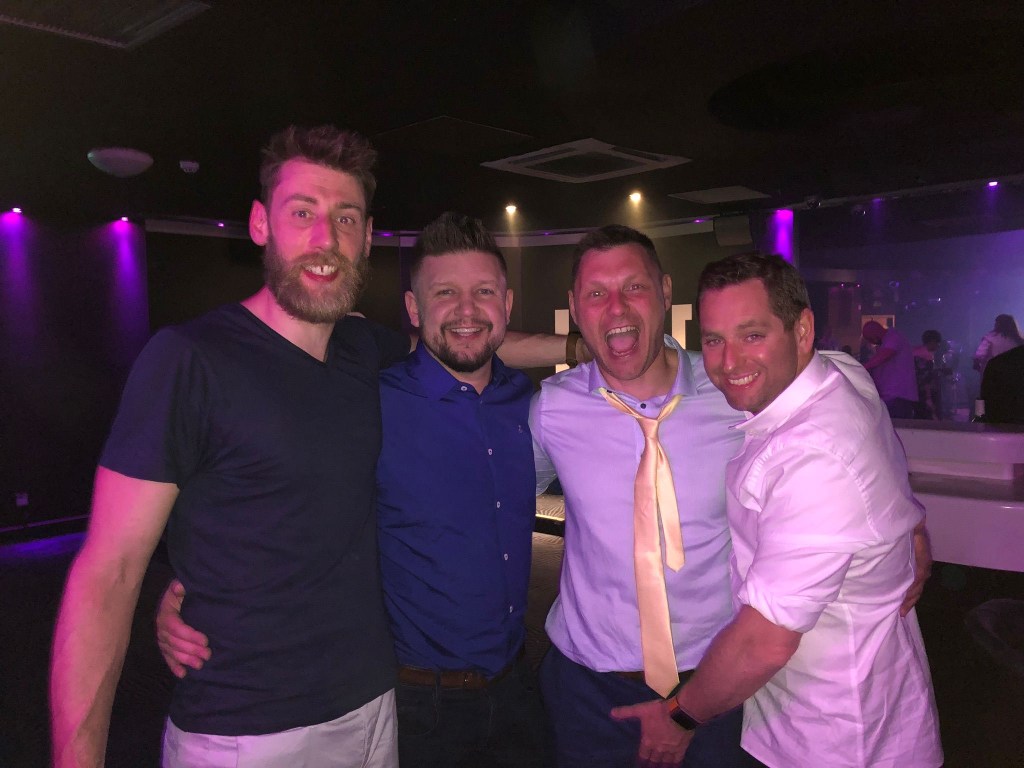
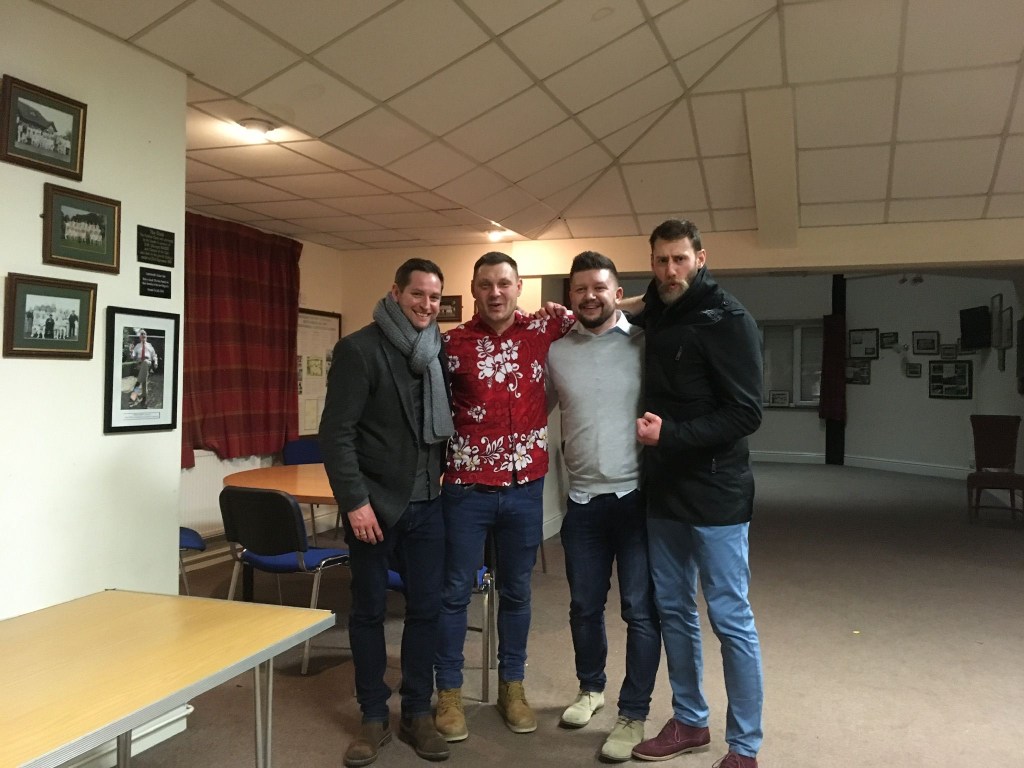
Myself, Jon, Pete and Rob have been mates since we were 12. We grew up side by side through some unforgettable teenage years, and even when I moved out to New Zealand at 17, we never really lost touch. There were nights out that blurred into mornings, bicycle pub crawls that felt like proper adventures, last-minute raves, and weekends built around MotoGP and superbikes. It was chaos, laughter, and loyalty all rolled into one.
Then, out of nowhere, it all fell apart.
No real reason. No life-changing moment. Just a daft fallout that somehow split us down the middle. And just like that, we went our separate ways—for 15 years.
I call them the wilderness years.
At the time, you don’t realise what you’re losing. You just get on with life, thinking there’ll always be time to fix things later.
But about eight years ago, we did fix it.
No big speeches. No dramatic reunion. Just four lads deciding enough was enough. And instead of picking up where we left off, we built something new—stronger, more honest, and shaped by everything we’d been through.
And it turns out… we needed that more than we knew.
Because not long after we found our way back to each other, life started to test us in ways it never had before.
We began losing our parents. Jon and Pete lost their mum’s to cancer. I lost my dad to a stroke—the man I looked up to, and still try to live up to every day.
And then there’s Maria’s anniversary and her absent birthdays…
Maria.
Jon’s sister.
She left us far too early after a tragic accident while she was at university. It hit Jon and his family hard, as it should. It’s not something you ever truly come to terms with.
I was very fond of her. She was that cool, beautiful older sister that all of us lads quietly looked up to. The one who felt completely out of reach at that age—unobtainable in that way only your mate’s older sister can be. She carried herself with something different, something we all noticed.
She is still very much missed.
A lot..
There were divorces. House moves. The growing weight of looking after parents who now needed us in ways we weren’t quite ready for.
Real life. Heavy life.
And without each other, it would’ve been incredibly difficult to carry.
But we weren’t apart anymore.
We had the group back. The messages, the calls, the check-ins, the quiet understanding. No need to explain everything—just knowing someone’s there who gets it.
And alongside all that, the good times came back too.
The pub became our meeting place again. The Superbikes and MotoGP were back. The laughs returned—proper ones, the kind that cut through everything else.
And then there’s things like the “George Rangitoto Academy”—our completely fictional Pacific Island rugby coach, who, according to us, is solely responsible for turning Dexter (Jon’s youngest son) into a future superstar. It’s ridiculous, and it’s exactly the kind of humour that’s been with us since we were kids.
That’s the thing about real friendship—it doesn’t just help you survive the hard times, it brings the light back in as well.
I’m proud of all the people I’ve met and the relationships I’ve built over the years, but nothing compares to this. These are my people. Always have been, always will be.
If the wilderness years taught me anything, it’s this: even the strongest friendships can be undone by something small if you let it grow.
But it also taught me something better—
That real friendship doesn’t disappear. It waits.
And one thing’s certain now… it won’t happen again.
Not on our watch.
Chapter Nine – Dare to Dream
Dare to dream.
It sounds like something you say lightly… until you realise what it actually asks of you. Because this isn’t just a shoot. This is a process. A long one.
Earning the Chance
Just getting to the selection shoots isn’t simple. You don’t just turn up.
To even get an invite, you have to submit your five best scores, from three different grounds, across months of shooting. Every registered shoot counts. Every round matters. And even then, there’s no guarantee.
Only the top 60 Seniors make it through. And that’s where I am. In the Senior category. In the mix.
From there, it all resets. Two shoots. Four hundred targets. Every score counts. No second chances. No hiding.
Nottingham
The first selection at Nottingham. Two days. Two hundred targets. Everything on the line.
And for me, there’s always something else there too. The noise. Not from the crowd — from my own head.
Day One
Day one started quietly. No fireworks. Just stepping on, mounting the gun, and getting on with it.
Target one — gone. Target two — gone.
You settle.
And then it starts. The thinking.
“Was that right?”
“Should you adjust something?”
“Don’t get this wrong.”
That’s where I’ve come unstuck before. Overthinking. Trying to control something that works best when it’s left alone.
But this time, I caught it. Let it pass. Back to what I know.
By the end of the day: 95/100.
A proper score. The kind that puts you in it. The kind that quietly wakes something up… expectation.
Day Two
Day two is where it normally unravels.
This is where the imposter syndrome turns up. And it doesn’t knock — it kicks the door in.
“You don’t belong here.”
“This isn’t your level.”
“You’ve had your good day — don’t ruin it now.”
I’ve listened to that voice before. And every time I have, I’ve tightened up. Started trying not to fail. And that’s exactly when it all slips away.
But this time, something was different.
The People Behind It
David had already stripped things back. The gun fits perfectly. Nothing to fix. Just a slight tweak to the hold. Simple.
Then there’s Duncan Spedding — the man who’s helped me understand what happens upstairs when it matters. You don’t perform better by thinking more. You perform better by trusting what’s already there.
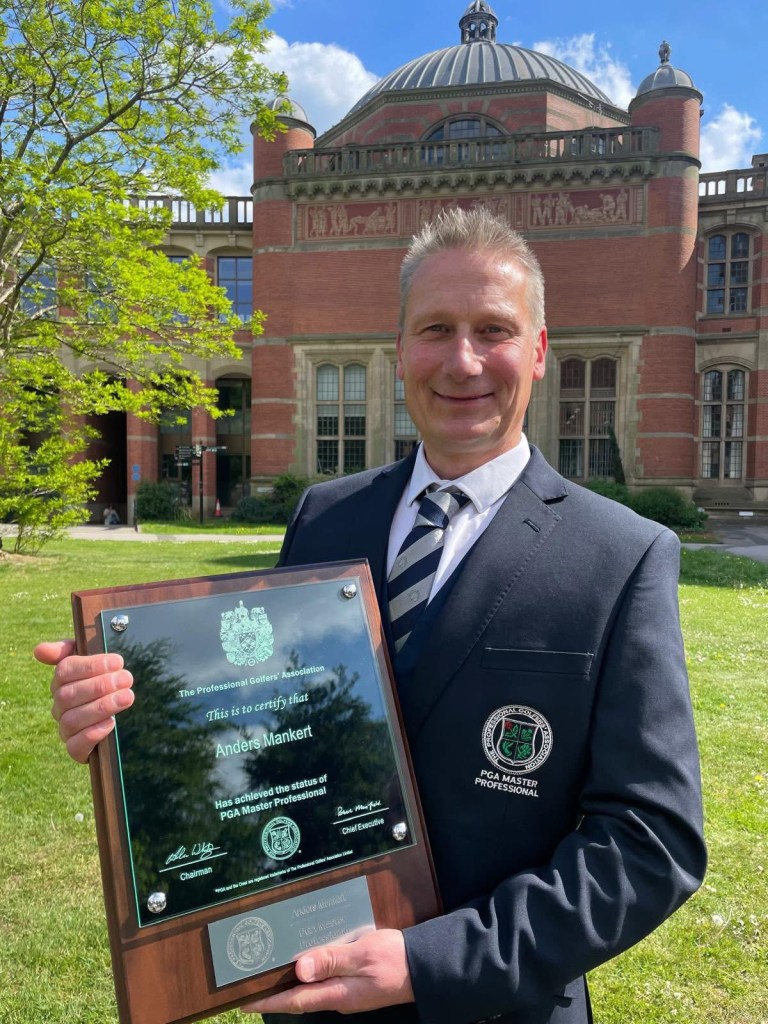
And then there’s Anders Mankert.
A mate. A golf pro. Someone who’s competed at the highest level and understands pressure properly. We live close, grab a beer when we can, and he’s part of those family nights — just one of the lads really.
But when he talks about performance, you listen.
His message was simple: if your setup is right — fully right — then trust it completely. One hundred percent belief. And forget everything else. The stuff you can’t control doesn’t deserve your attention.
That landed. Properly.
Because most of my issues haven’t been ability. They’ve been doubt. Anders just cut straight through that.
My Corner
And then there’s the people who sit behind all of this.
Fay — through everything, steady as ever. The boys — watching, learning, probably taking more in than I realise. And the Wilderness boys — years of friendship, loyalty, and the kind of support that doesn’t need dressing up.
They’ve seen it all. The good days, the bad days, the ideas that worked… and the ones that probably shouldn’t have left my head. And they’re still there.
Support. Banter. Honesty.
That matters more than I’ll ever properly say.
And quietly, in the background, there’s something else as well. A sense that I’m not carrying all of this on my own. Not loudly, not in a way I talk about much — just a steady, quiet kind of faith. The kind that settles you when things get tense, that reminds you to stand still when your instinct is to overthink, and to trust that things will land where they’re meant to.
Back on the Stand
So day two, when that voice started again, I didn’t fight it. I didn’t try to outthink it. I just went back to what I know.
The setup is right. Leave it alone. Trust the shot.
It wasn’t perfect. A few dropped. A couple I’d want back.
But there was no collapse. No spiral. Just steady.
By the end of the day: 93/100.
The Score
Total: 188/200.
And just like that, I’m sitting 10th in the Senior rankings. The last qualifying place. The one that keeps you in it… or sends you home.
The Real Battle
If I’m honest, the biggest opponent out there isn’t the targets.
It’s me.
The overthinking. The doubt. The imposter syndrome.
That’s what’s cost me before. Getting close… and then getting in my own way.
But this time, I didn’t.
This Time Feels Different
This year feels different. Not because it’s easier, but because I’m not fighting myself anymore.
Phil built the base. David refined it. Duncan helped me understand the mind. And Anders reminded me of something simple:
If the setup is right… let it go.
What Comes Next
There are 200 more targets waiting at Dartford at the end of May, and everything is still to play for. Sitting 10th, right on the edge, this is exactly where I’ve fallen apart before — where the pressure builds, the doubt creeps in, and I start listening to the wrong voice.
But not this time.
This time I know what’s coming. I recognise it, and I don’t have to listen to it.
Because for the first time, I’m not trying to prove I belong.
I’m starting to believe that I do.
And that might just be the difference.
 Igniting the Ordinary
Love it brother!!! Stay on it. If anyone can do it, you can. 👍🏻👍🏻
LikeLiked by 1 person